
Home / What science says
Science
What science says about molecular hydrogen
What molecular hydrogen is, what has been studied about inhaling it in healthy people and what we do not know yet. With the original sources and no promises.
The molecule
The smallest molecule there is
Molecular hydrogen (H2) is two hydrogen atoms bonded together. It is a colourless, odourless and tasteless gas, and the smallest molecule there is, which lets it diffuse very easily.
It is not the same as the hydrogen that is part of water (H2O): there it is bonded to oxygen. VIVAIR Pro breaks that bond by electrolysis and gives you hydrogen as a gas.
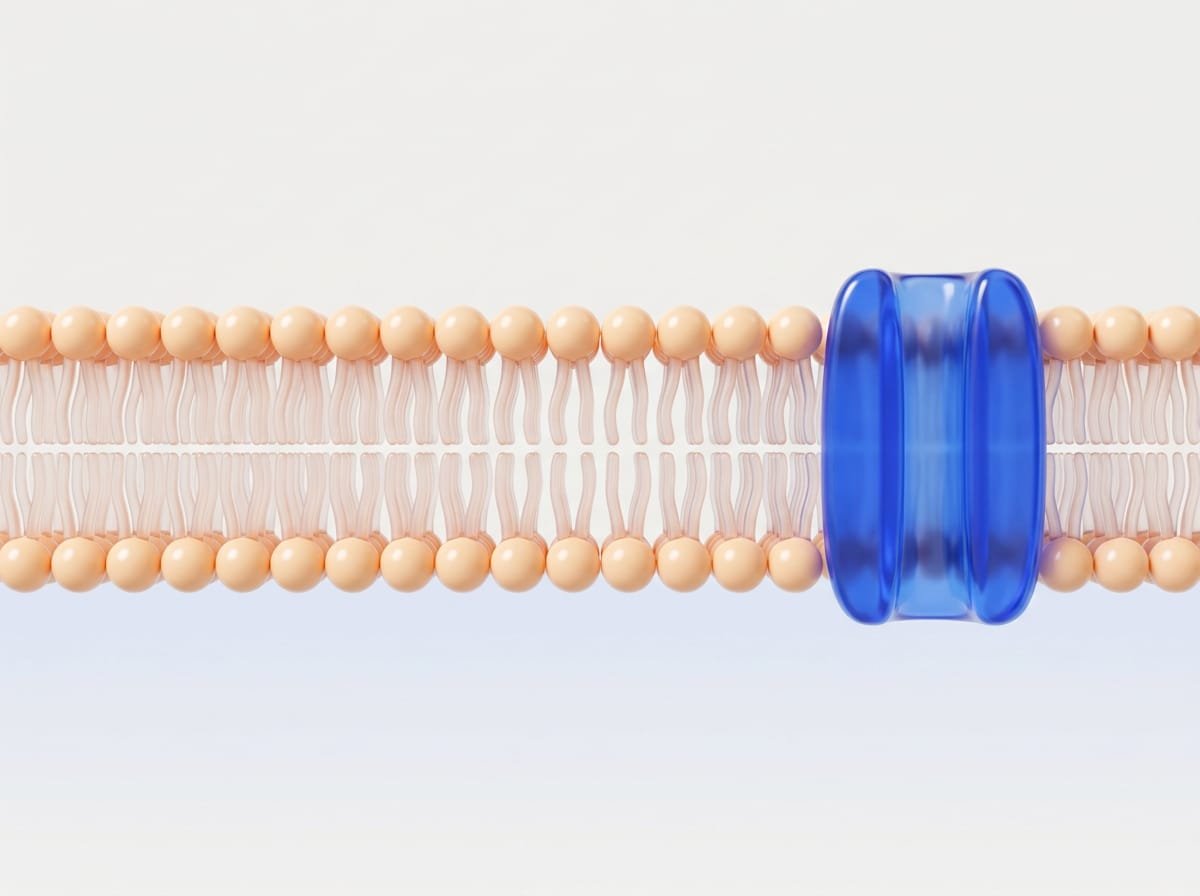
Simplified illustration. Relative sizes based on molecular mass. Vitamin C and glucose enter the cell through transporters; hydrogen diffuses freely.
Inside the cell
How hydrogen moves through your body
It is so small it doesn't need "doors" to enter the cell. This is what research on molecular hydrogen describes:
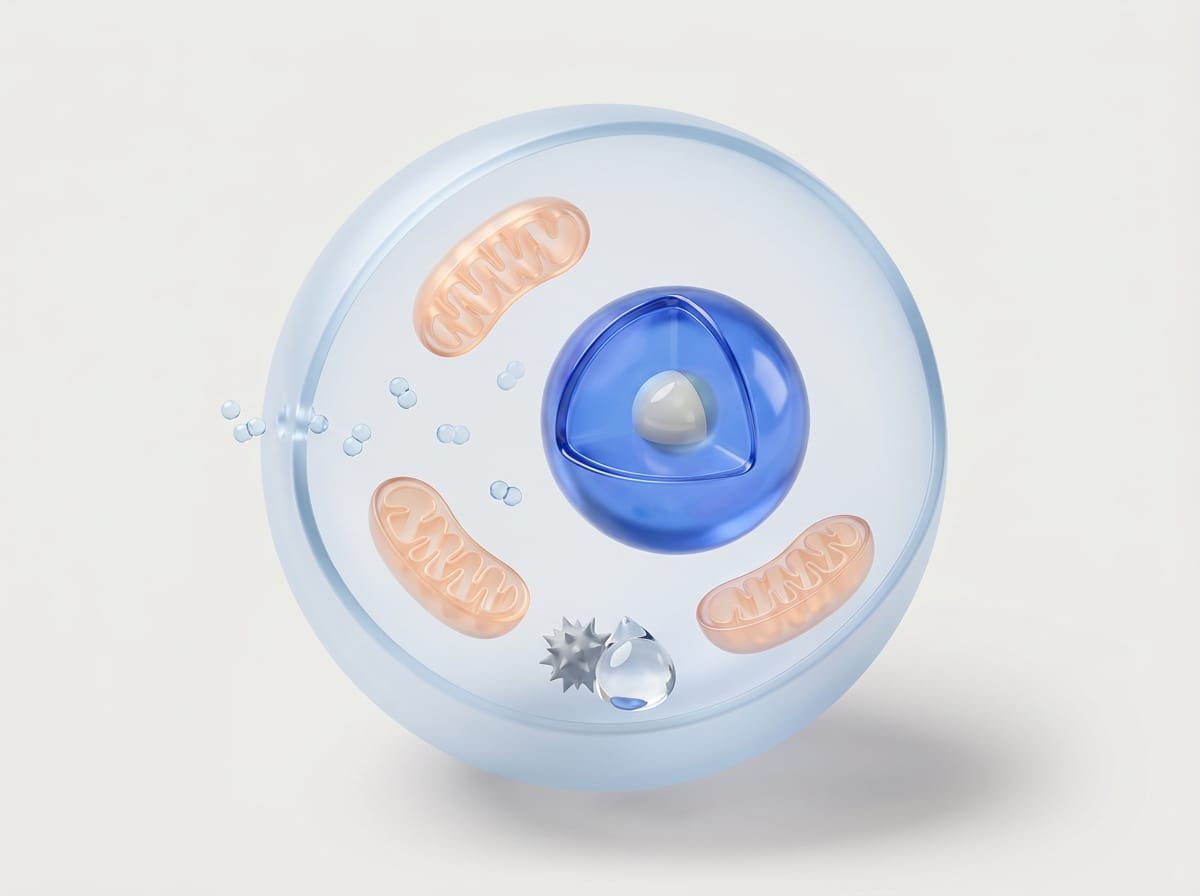
- 1Crosses the membrane. H₂ is the smallest molecule there is and has no electrical charge: it passes through the cell membrane effortlessly.
- 2Reaches the mitochondria. The cell's "power plants", where many free radicals are generated.
- 3Reaches the nucleus. Thanks to its size it spreads through the whole cell, including the nucleus.
- 4A selective antioxidant. Research describes it as an antioxidant that acts on the most reactive radicals, such as hydroxyl (•OH), turning them into water without interfering with the ones the body needs.
Simplified illustration based on the scientific literature on molecular hydrogen.
In context
Modern life and oxidative stress
Every day, city pollution, stress, intense exercise or the sun increase the oxidative stress on our cells: more free radicals than the body can neutralise on its own.
That is why science is so interested in molecular hydrogen: a selective antioxidant so small that it reaches everywhere and acts precisely on the most aggressive radicals.
We explain this so you understand the scientific interest, not as a promise: VIVAIR is a wellbeing device, not a medical device.
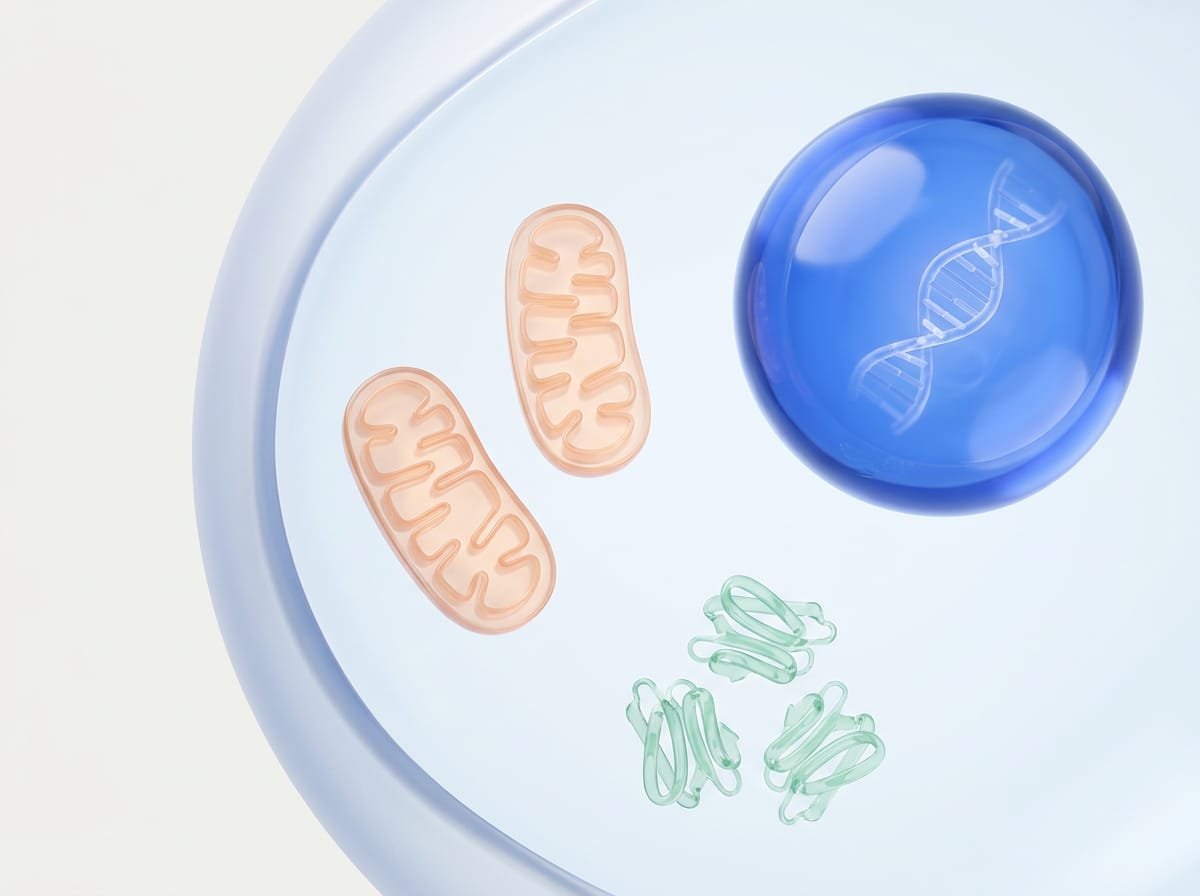
Simplified illustration based on the scientific literature on oxidative stress and molecular hydrogen.
Something your body already knows
Your body already produces hydrogen every day
Gut bacteria produce hydrogen when they ferment the fibre in food. Some of it passes into the blood and is exhaled: that is why hydrogen in the breath can be measured.
Studies in healthy people
Studies on hydrogen inhalation
Hydrogen inhalation is still a young field of research. Here we have gathered a selection of studies published in peer-reviewed scientific journals that were carried out with healthy people or healthy athletes. For each one we summarise, in neutral terms, what was done, what was measured and what the researchers observed, with a link to the original publication.
These are small studies, conducted under laboratory conditions and with devices other than VIVAIR. We present them for information purposes only, not as evidence of any effect of the device.
The studies listed were not carried out with VIVAIR. VIVAIR is a wellness device, not a medical device.
Safety of prolonged hydrogen inhalation in healthy adults
8Participants 8 healthy adults
View details
- Study design
- Phase I, open-label, single-group study.
- What was done
- Participants breathed air containing 2.4% hydrogen through a nasal cannula for 24, 48 or 72 consecutive hours in a supervised hospital setting.
- What was measured
- Vital signs, symptoms, lung function, electrocardiogram, neurological examination and blood tests.
- What the researchers observed
- No clinically significant changes in the parameters assessed. They concluded that this exposure does not appear to cause clinically relevant adverse effects in healthy adults, while noting that larger studies are needed.
- Publication
- Cole AR, Sperotto F, DiNardo JA, Carlisle S, Rivkin MJ, Sleeper LA, Kheir JN. Safety of Prolonged Inhalation of Hydrogen Gas in Air in Healthy Adults. Critical Care Explorations. 2021;3(10):e543.
Third-party study, not related to VIVAIR.
Inhaling a hydrogen–oxygen mixture before intense exercise
24Participants 24 healthy, physically active adult men
View details
- Study design
- Randomised, double-blind, crossover.
- What was done
- Before a demanding cycling test, each participant breathed a hydrogen–oxygen mixture (2:1 ratio) or air through a nasal cannula for 60 minutes, in separate sessions.
- What was measured
- Perceived tiredness (visual scale), perceived exertion, pedalling cadence, vertical jump and blood parameters.
- What the researchers observed
- After the hydrogen mixture, participants reported less tiredness and lower perceived exertion and kept a slightly higher cadence at the end of the test; vertical jump showed no difference.
- Publication
- Dong G, Wu J, Hong Y, Li Q, Liu M, Jiang G, Bao D, Manor B, Zhou J. Inhalation of Hydrogen-rich Gas before Acute Exercise Alleviates Exercise Fatigue: A Randomized Crossover Study. International Journal of Sports Medicine. 2024;45(13):1014–1022.
Third-party study, not related to VIVAIR.
Hydrogen before a progressive exercise test
24Participants 24 healthy young men
View details
- Study design
- Randomised, crossover, placebo-controlled.
- What was done
- Participants breathed a hydrogen–oxygen mixture (2:1) or a placebo gas for 20 minutes before an incremental stationary-bike test.
- What was measured
- Perceived exertion, heart rate and prefrontal cortex activity using near-infrared spectroscopy.
- What the researchers observed
- Perceived exertion was lower in the hydrogen condition, and heart rate was slightly lower at the higher-intensity stages.
- Publication
- Hong Y, Dong G, Li Q, Wang V, Liu M, Jiang G, et al. Effects of pre-exercise H2 inhalation on physical fatigue and related prefrontal cortex activation during and after high-intensity exercise. Frontiers in Physiology. 2022;13:988028.
Third-party study, not related to VIVAIR.
Inhalation during recovery after exercise
8Participants 8 healthy men
View details
- Study design
- Randomised, crossover, placebo-controlled.
- What was done
- After a demanding exercise session, participants breathed a hydrogen-containing gas mixture or normal gas through a nasal cannula during a 60-minute recovery period.
- What was measured
- Jump, cycling power and strength tests, plus blood and urine samples.
- What the researchers observed
- Jump height decreased less after the hydrogen condition; the other performance tests showed no differences.
- Publication
- Shibayama Y, Dobashi S, Arisawa T, Fukuoka T, Koyama K. Impact of hydrogen-rich gas mixture inhalation through nasal cannula during post-exercise recovery period on subsequent oxidative stress, muscle damage, and exercise performances in men. Medical Gas Research. 2020;10(4):155–162.
Third-party study, not related to VIVAIR.
Seven days of short inhalation sessions in young adults
20Participants 20 healthy young adults (10 women, 10 men)
View details
- Study design
- Randomised, double-blind, crossover pilot study.
- What was done
- Participants inhaled air with 4% hydrogen or room air for 20 minutes a day over 7 days, in two separate phases.
- What was measured
- Treadmill running performance, strength tests and blood parameters.
- What the researchers observed
- Peak running speed was 4.2% higher after the hydrogen phase, a difference at the borderline of statistical significance. The authors present these as preliminary results.
- Publication
- Javorac D, Stajer V, Ratgeber L, Betlehem J, Ostojic SM. Short-term H2 inhalation improves running performance and torso strength in healthy adults. Biology of Sport. 2019;36(4):333–339.
Third-party study, not related to VIVAIR.
Resting gas exchange over 60 minutes
20Participants 20 healthy, physically active young women (mean age 22)
View details
- Study design
- Randomised, double-blind, crossover, placebo-controlled.
- What was done
- Participants breathed hydrogen through a nasal cannula or room air for 60 minutes at rest, in two separate sessions.
- What was measured
- Respiratory gas exchange with a breath-by-breath analyser.
- What the researchers observed
- During hydrogen inhalation they recorded a lower respiratory exchange ratio and lower ventilation than with air.
- Publication
- Grepl P, Botek M, Krejčí J, McKune A. Molecular hydrogen inhalation modulates resting metabolism in healthy females: findings from a randomized, double-blind, placebo-controlled crossover study. Medical Gas Research. 2025;15(3):367–373.
Third-party study, not related to VIVAIR.
Oxygen saturation and heart rhythm at rest
20Participants 20 healthy, physically active women who completed the study (24 recruited; mean age 22)
View details
- Study design
- Randomised, double-blind, crossover, with 7 days between sessions.
- What was done
- 60 minutes of hydrogen or room air inhalation at rest.
- What was measured
- Blood oxygen saturation and heart rate variability.
- What the researchers observed
- Mean saturation was slightly lower with hydrogen (95.9% vs 96.7%), a difference the authors do not consider clinically relevant; heart rate variability did not change.
- Publication
- Grepl P, Krejčí J, McKune A, Botek M. Sixty-minute inhalation of molecular hydrogen decreases blood oxygen saturation but does not alter autonomic cardiac regulation at rest in healthy females: a randomized, double-blind, placebo-controlled crossover study. Canadian Journal of Physiology and Pharmacology. 2026;104:1–9.
Third-party study, not related to VIVAIR.
A single 30-minute session in healthy adults
15Participants 15 healthy adults (8 men, 7 women; mean age 53)
View details
- Study design
- Exploratory single-session study without a control group.
- What was done
- Participants breathed hydrogen through a nasal cannula for 30 minutes.
- What was measured
- Prefrontal cortex oxygenation using near-infrared spectroscopy and heart rate variability.
- What the researchers observed
- Transient, modest changes in both parameters. The authors stress that the study did not assess any benefit and that placebo-controlled trials are needed.
- Publication
- Moriya M, Oyama K, Den Y, Yamada Y, Sakatani K. Hydrogen inhalation is associated with a transient rightward shift in prefrontal oxyhemoglobin asymmetry and autonomic modulation. Scientific Reports. 2026;16:6202.
Third-party study, not related to VIVAIR.
How to read these studies
- These are small (8 to 24 participants), short-term laboratory studies.
- They used different concentrations, durations and devices, all different from VIVAIR.
- A result from a single study does not allow general conclusions; research is ongoing.
- We only include studies in healthy people published in peer-reviewed journals.
VIVAIR is a wellness device, not a medical device. It is not intended to diagnose, treat, cure or prevent any disease. The studies cited on this page were carried out with other devices and under other conditions, not with VIVAIR, and do not imply that the device produces those effects. This content is for information only and does not replace advice from a healthcare professional. If you have a medical condition, are pregnant or take medication, consult your doctor before using any inhalation device. The oxygen produced by VIVAIR is not a substitute for medical oxygen.
Last reviewed: October 2026Get to know VIVAIR
Drinking or breathing
Hydrogen water or breathed hydrogen: how they differ
They are two different ways of taking in molecular hydrogen, and they can be combined. These are their practical differences, with data and no judgements about health.
| Drinking hydrogen water | Breathing hydrogen with VIVAIR Pro | |
|---|---|---|
| Amount of hydrogen | About 0.4 mg in a saturated 250 ml glass (1.6 mg/L, the maximum at normal pressure) | About 100 mg every minute, produced by the device (1,200 ml/min) |
| How it enters | Through the digestive system | Through the nose, with a nasal cannula. With the accessories, also through the eyes (goggles) and the ear canal (earpieces) |
| How long the intake lasts | As long as it takes you to drink the glass | The whole session: from a few minutes to 6 hours |
| How it behaves | In people, breath hydrogen peaks 10 to 15 minutes after drinking and soon returns to its usual level | You receive it continuously for as long as the session lasts |
| Stability | Hydrogen escapes from water within minutes: it has to be drunk freshly made | It is generated on demand, without storing it |
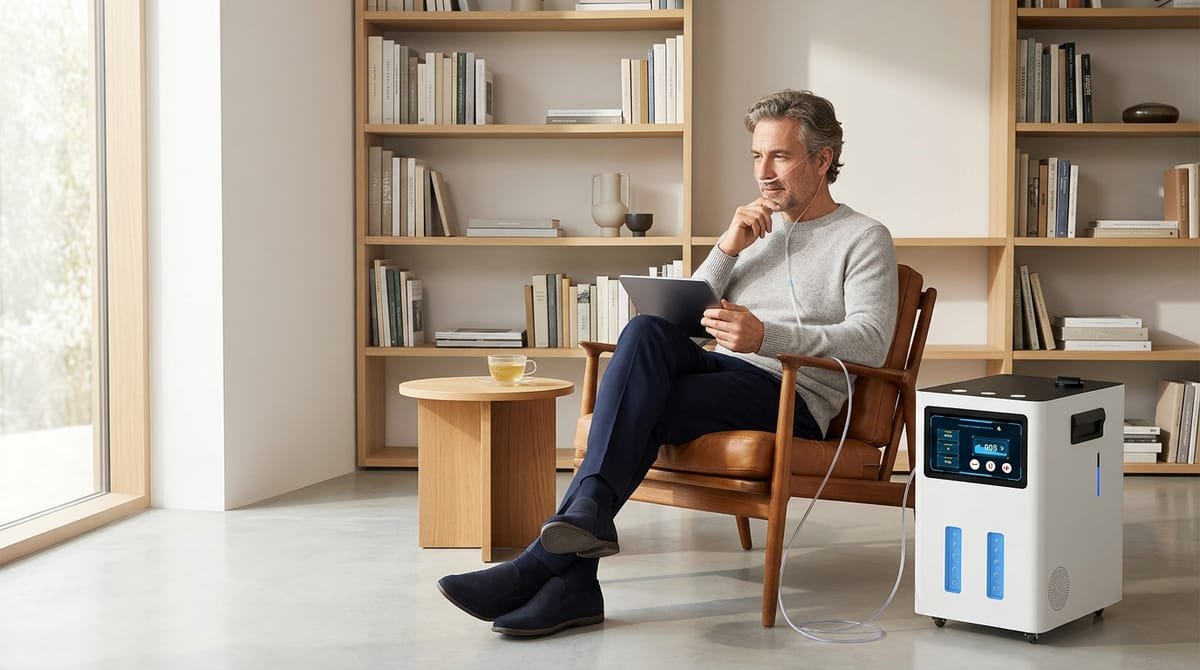
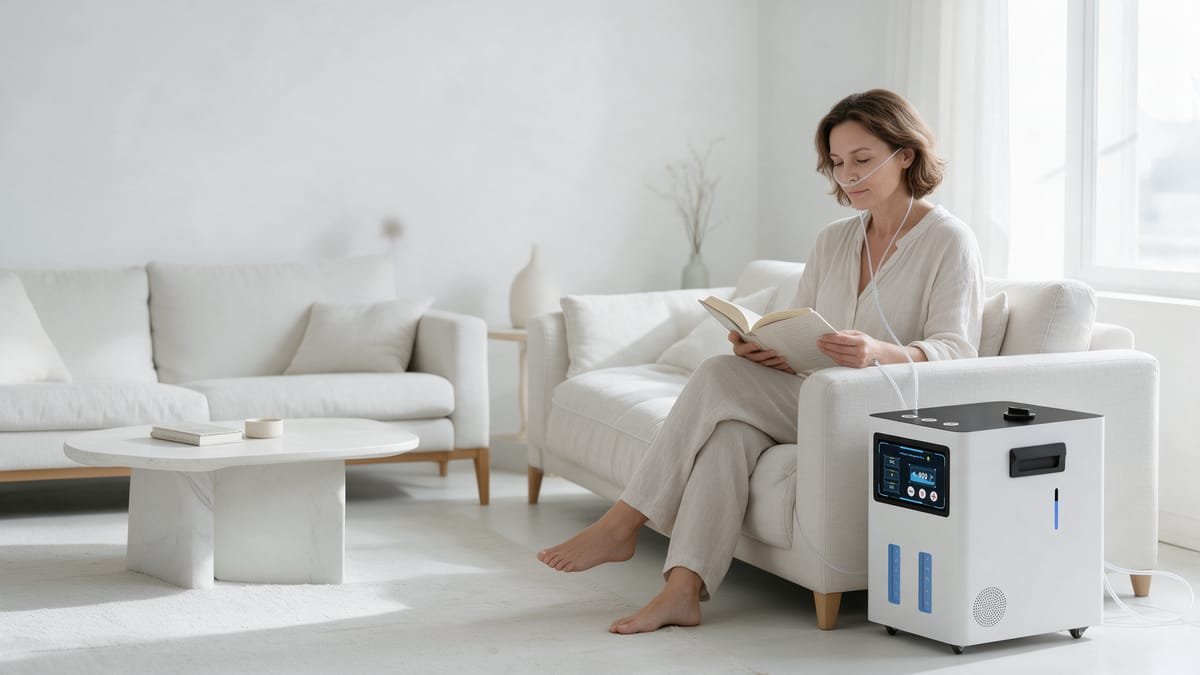
| Where | Anywhere, with a water generator or a bottle | At home, with the device nearby, while you watch TV, use your phone or read |
The VIVAIR Pro figure is the hydrogen the device produces, not the amount the body absorbs. The water data come from a small study in healthy adults (Shimouchi, 2009).
Safety
What we know about its safety
In a 2021 study, eight healthy adults breathed air with 2.4% hydrogen for 24 to 72 hours in a row, without relevant adverse effects.
As with any gas, there are a few simple safety rules to follow: use VIVAIR in a ventilated room, away from flames and heat sources, and uncovered.
Before you start
Your wellbeing moment, with common sense
VIVAIR is a wellbeing device. If you have a health condition, are pregnant or take medication, talk to a healthcare professional first.
Still have questions? We'll answer them.
A real advisor calls you, in Spanish and with no obligation.
Still have questions? We'll answer them.
Write to us and we reply within 24 business hours.