
Home / How it works
How it works
From water to your breath: how VIVAIR Pro works
VIVAIR Pro produces hydrogen and oxygen from purified water, on demand and without cylinders. You breathe it through a nasal cannula while you rest.
What molecular hydrogen is
The smallest molecule there is
It is the smallest molecule there is: two hydrogen atoms bonded together (H2). VIVAIR produces it from purified water, on demand and without cylinders.
How it generates it
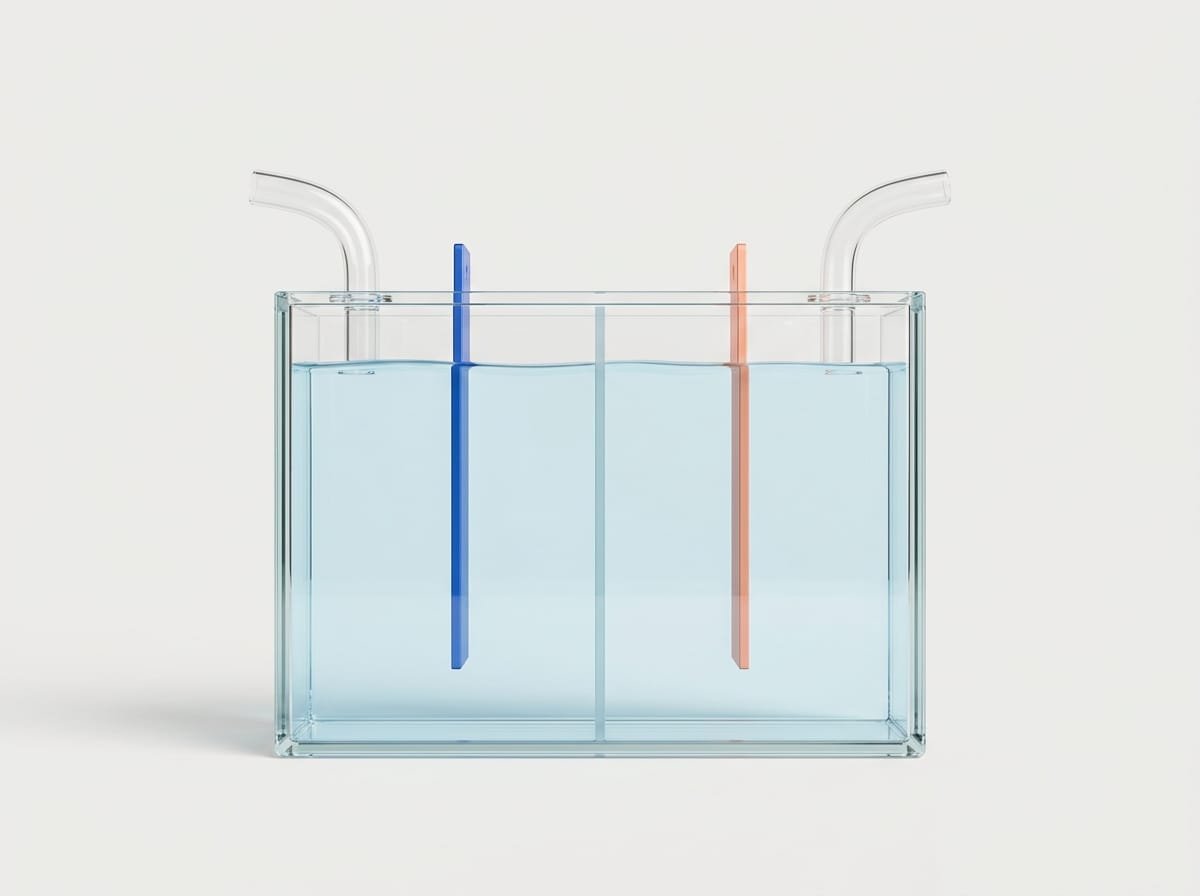
PEM electrolysis: from water to two separate gases
Through PEM electrolysis: a proton exchange membrane splits water into hydrogen and oxygen. Each gas comes out of its own outlet, so you always know what you are breathing.
- 01
Purified water in the tank
Reverse-osmosis or distilled, with TDS ≤30 ppm. It is the device's raw material, not drinking water.
- 02
The membrane splits the molecule
The electric current splits water (H2O) into hydrogen (H2) and oxygen (O2).
- 03
Each gas comes out of its outlet
1,200 ml/min of hydrogen and 600 ml/min of oxygen, through separate outlets.
- 04
It reaches your cannula
A light tube that rests on your nose. You breathe normally.
The heart of VIVAIR Pro
A PEM cell, layer by layer
The hydrogen is produced in a PEM electrolysis cell. Purified water goes in, the current splits it, and hydrogen and oxygen leave by separate paths, without mixing. Scroll down to open it.
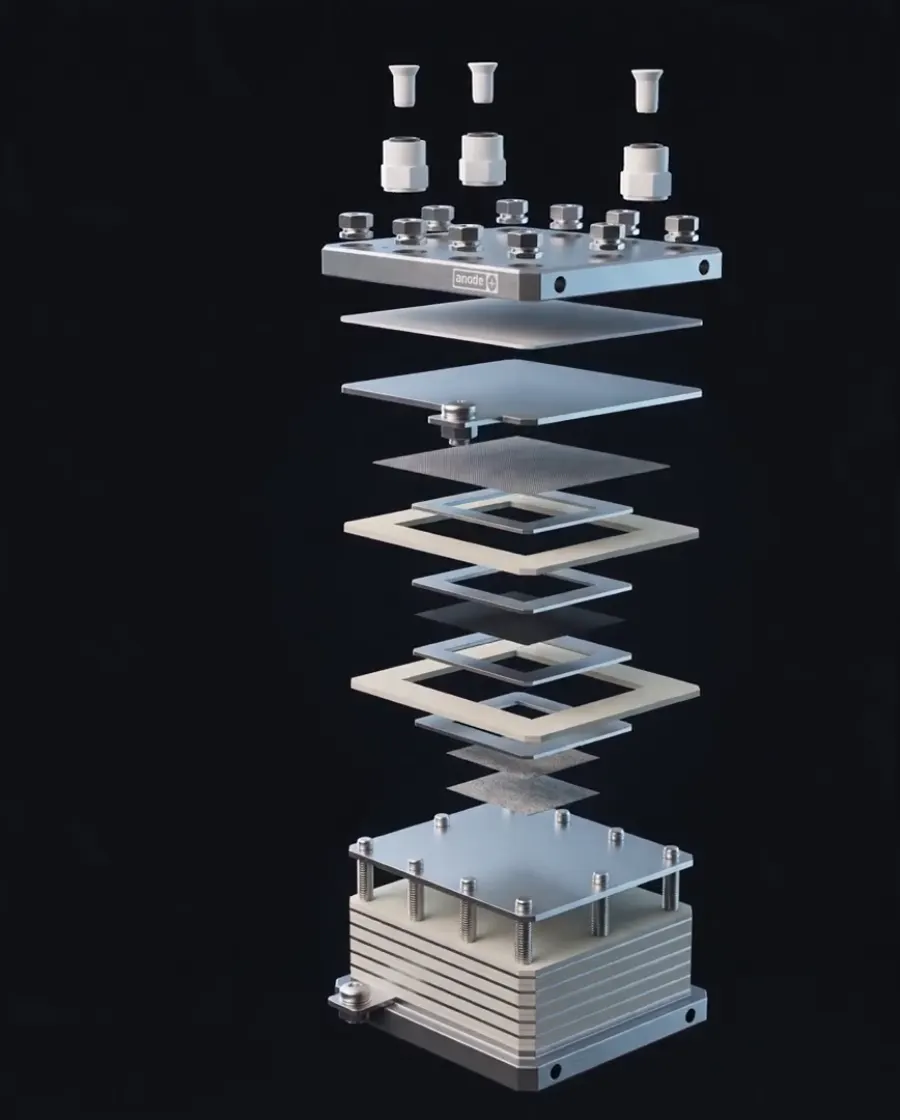
- Gas connections
- End plate
- Current collector
- Titanium mesh
- Sealing gaskets
- PEM membrane
- Bipolar plates and base
Gas connections
One outlet for hydrogen and another for oxygen: each gas leaves on its own side.
End plate
Machined aluminium that closes the cell and keeps it firmly clamped.
Current collector
Spreads the current over the whole surface so the cell works evenly.
Titanium mesh
Lets water and gases through evenly and withstands years of work without corroding.
Sealing gaskets
They seal each layer so hydrogen and oxygen never mix.
PEM membrane
The heart of the cell: with its catalyst, it splits the water and only lets protons through. Hydrogen forms on the other side.
Bipolar plates and base
They stack several cells in series to produce more hydrogen in the same space and carry it to its outlet.
What 1,200 ml/min means
Figures to compare, not adjectives
It is the amount of hydrogen the device produces every minute. We state it clearly so you can compare with figures, not adjectives.
- 1,200
- ml/min of hydrogen
- 600
- ml/min of oxygen
- 1.800
- ml/min of total flow
- 600
- people at a time
Why separate outlets
You always know what you are breathing
Hydrogen and oxygen come out of separate outlets, so you choose what to breathe: hydrogen only, oxygen only or both together with a T cannula (Brown's gas). Each person connects their own cannula, which is why two people can use it at the same time.
A session step by step
Five steps, from filling the tank to finishing
- 01
Check the water level
The side windows show it at a glance.
- 02
Put on your cannula
Each person uses their own.
- 03
Choose the time
From the touchscreen, in your language.
- 04
Breathe normally in a ventilated room
Read, listen to music or close your eyes.
- 05
When it finishes, the device stops by itself
Remove the cannula and store it as the manual explains.
To avoid any confusion
What VIVAIR Pro is and what it isn't
- A home wellbeing device that generates hydrogen and oxygen for you to breathe
- For one or two people at a time
- A water purifier: it does not produce drinking water
- An oxygen concentrator or a humidifier
- A medical device
Recommended reading
Sources and data, no promises
Still have questions? We'll answer them.
A real advisor calls you, in Spanish and with no obligation.
Still have questions? We'll answer them.
Write to us and we reply within 24 business hours.