
Home / What science says
Science
What science says about molecular hydrogen
What is being researched, how it is studied and what we don't know yet. With sources and without promises.
The molecule
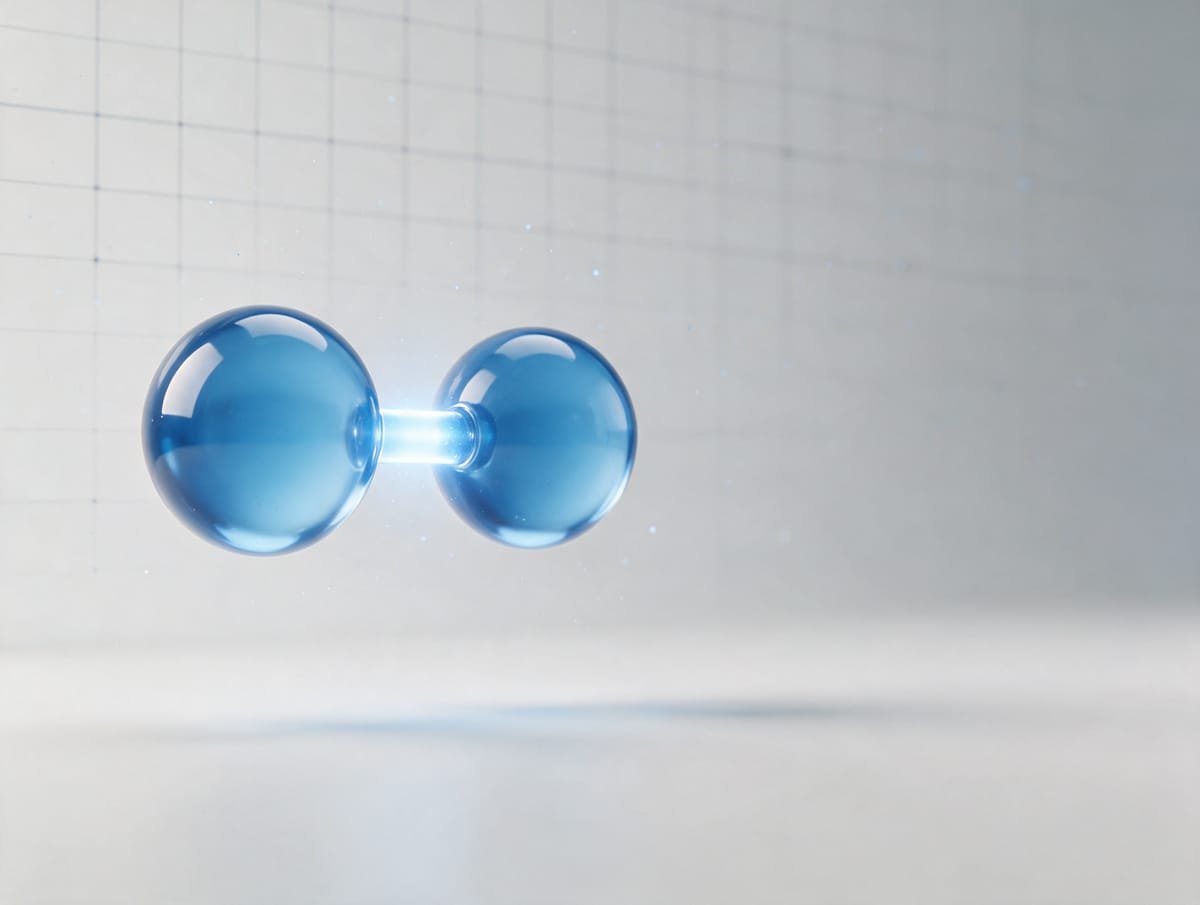
The smallest molecule there is
Molecular hydrogen (H2) is two hydrogen atoms bonded together. It is a colourless, odourless and tasteless gas, and the smallest molecule there is, which lets it diffuse very easily.
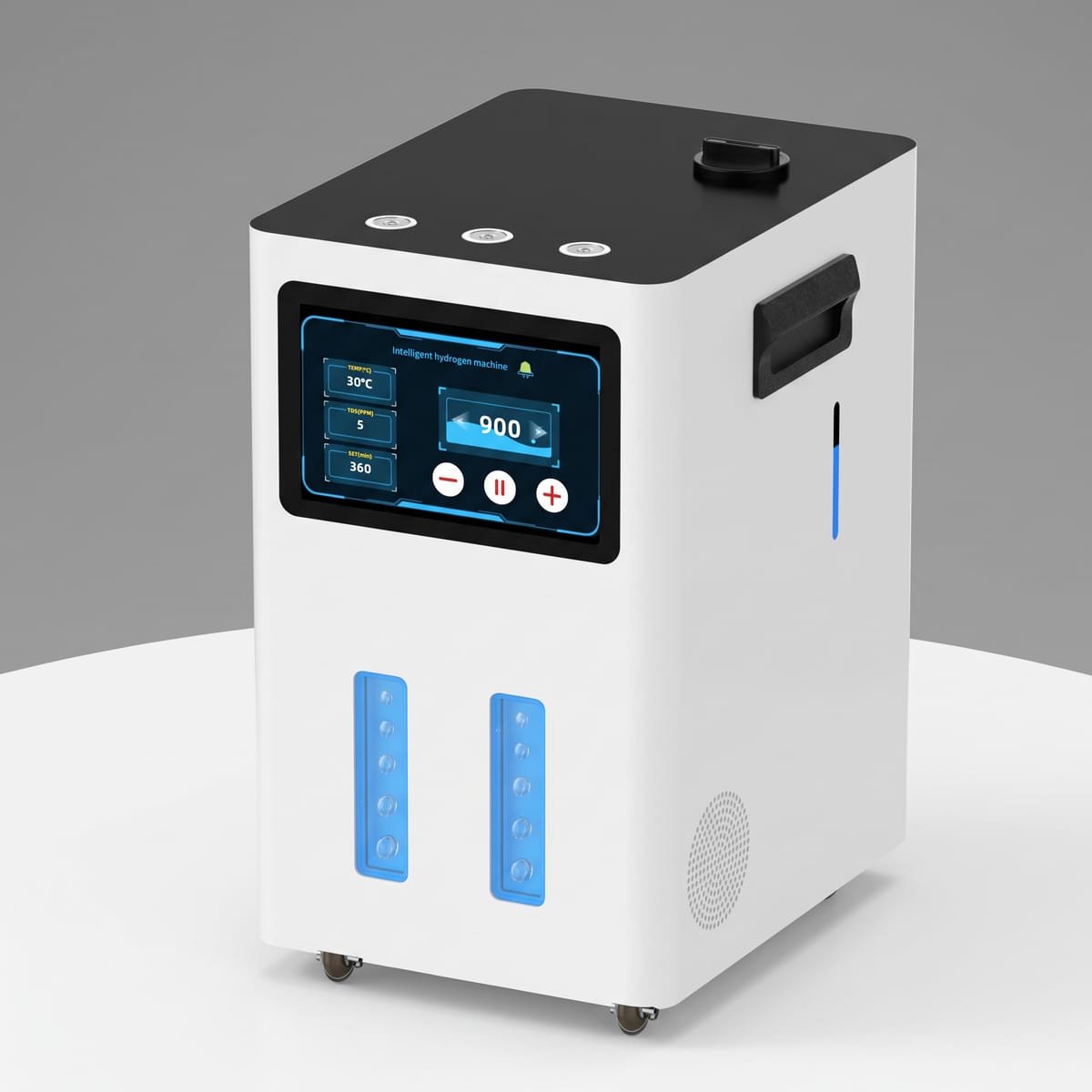
It is not the same as the hydrogen that is part of water (H2O): there it is bonded to oxygen. VIVAIR Pro breaks that bond by electrolysis and gives you hydrogen as a gas.
Inside the cell
How hydrogen moves through your body
It is so small it doesn't need "doors" to enter the cell. This is what research on molecular hydrogen describes:
- 1Crosses the membrane. H₂ is the smallest molecule there is and has no electrical charge: it passes through the cell membrane effortlessly.
- 2Reaches the mitochondria. The cell's "power plants", where many free radicals are generated.
- 3Reaches the nucleus. Thanks to its size it spreads through the whole cell, including the nucleus.
- 4A selective antioxidant. Research describes it as an antioxidant that acts on the most reactive radicals, such as hydroxyl (•OH), turning them into water without interfering with the ones the body needs.
Simplified illustration based on the scientific literature on molecular hydrogen.
Something your body already knows
Your body already produces hydrogen every day
Gut bacteria produce hydrogen when they ferment the fibre in food. Some of it passes into the blood and is exhaled: that is why hydrogen in the breath can be measured.
Research in figures
An active field of study
Research on molecular hydrogen has grown a lot over the last fifteen years. On this page we only cite studies carried out with people.
- 81
- trials in people collected in a 2023 review
- 64
- publications with studies in people in that same review
- 20 min
- the time it takes for hydrogen in the blood to stabilise when breathing it (Ono, 2012)
How it is studied
Not all studies carry the same weight
- 01
Measurement studies
They measure how hydrogen enters and leaves the body, for example in the breath or the blood. They describe, but do not assess effects.
- 02
Pilot studies
Small groups, often without a control group. They give direction, but do not prove.
- 03
Controlled trials
They compare against a control group, ideally without participants knowing what they receive. They carry the most weight, and with molecular hydrogen there are still few and they are small.
- 04
Reviews
They bring together and analyse many studies at once. They help to see the whole picture and its limits.
Drinking or breathing
Hydrogen water or breathed hydrogen: how they differ
They are two different ways of taking in molecular hydrogen, and they can be combined. These are their practical differences, with data and no judgements about health.
| Drinking hydrogen water | Breathing hydrogen with VIVAIR Pro | |
|---|---|---|
| Amount of hydrogen | About 0.4 mg in a saturated 250 ml glass (1.6 mg/L, the maximum at normal pressure) | About 100 mg every minute, produced by the device (1,200 ml/min) |
| How it enters | Through the digestive system | Through the nose, with a nasal cannula. With the accessories, also through the eyes (goggles) and the ear canal (earpieces) |
| How long the intake lasts | As long as it takes you to drink the glass | The whole session: from a few minutes to 6 hours |
| How it behaves | In people, breath hydrogen peaks 10 to 15 minutes after drinking and soon returns to its usual level | In people, blood hydrogen rises for about 20 minutes, stays stable while breathing it and falls within a few minutes after stopping |
| Stability | Hydrogen escapes from water within minutes: it has to be drunk freshly made | It is generated on demand, without storing it |
| Where | Anywhere, with a water generator or a bottle | At home, with the device nearby, while you watch TV, use your phone or read |
The VIVAIR Pro figure is the hydrogen the device produces, not the amount the body actually absorbs. The behaviour data come from small studies (Shimouchi, 2009; Ono, 2012).
Safety
What we know about its safety
In a 2021 study, eight healthy adults breathed air with 2.4% hydrogen for 24 to 72 hours in a row, without relevant adverse effects.
As with any gas, there are a few simple safety rules to follow: use VIVAIR in a ventilated room, away from flames and heat sources, and uncovered.
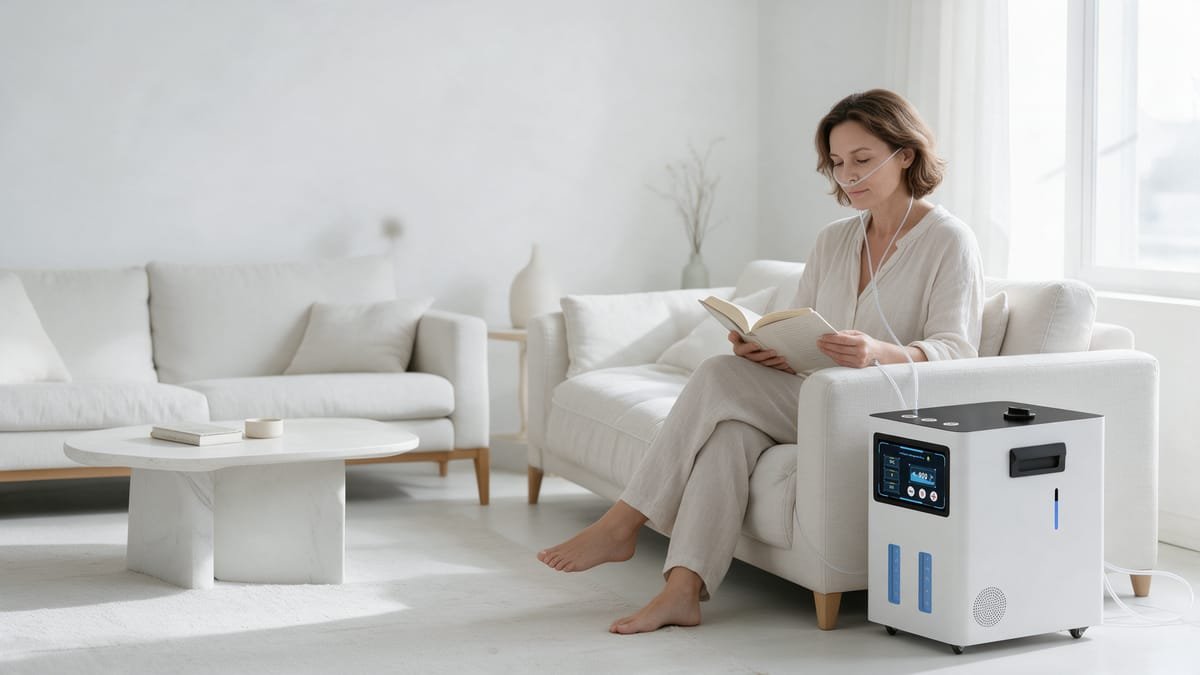
Before you start
Your wellbeing moment, with common sense
VIVAIR is a wellbeing device. If you have a health condition, are pregnant or take medication, talk to a healthcare professional first.
Sources
Further reading
We only cite studies carried out with people. The links go to the original publication.
- Shimouchi A. et al. Biomarker Insights, 2009; 4: 27–32Hydrogen in the breath after drinking hydrogen-rich water, in healthy adults.Open
- Ono H. et al. Medical Gas Research, 2012; 2: 21How hydrogen in arterial and venous blood changes while breathing the gas and after stopping.Open
- Cole A. R. et al. Critical Care Explorations, 2021; 3(10): e543Safety of breathing air with 2.4% hydrogen for several days in healthy adults.Open
- Review of studies in people with molecular hydrogen. Molecules, 2023Collects the trials and publications in people up to 2023, with their limits.Open
Still have questions? We'll answer them.
A real advisor calls you, in Spanish and with no obligation.
Still have questions? We'll answer them.
Write to us and we reply within 24 business hours.